Oh Mary Conceived Without Sin...

By: Sr. Mariana Joy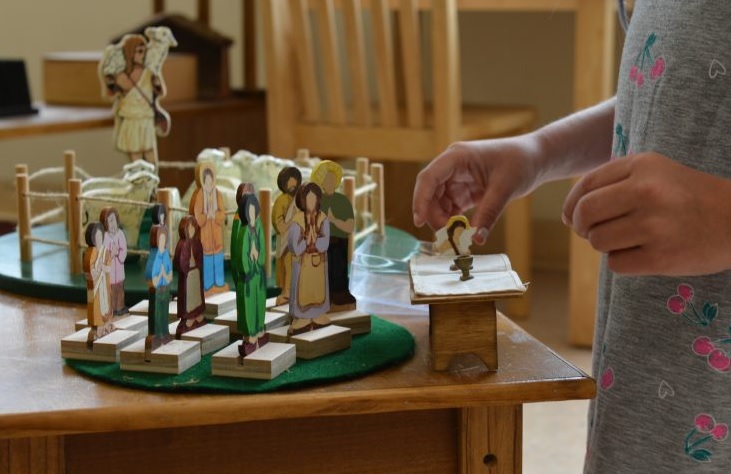
My heart is often deeply moved and in awe at the profound wisdom that comes from the mouth of a child. Their capacity to know God and be in relationship with Him is innate and written into their very being—I have the privilege of witnessing the working of grace in their souls while in the atrium at our daycare center. I love presenting the Good Shepherd to the children in the atrium, because we don’t tell the children that they are the sheep, but allow them to discover this on their own. They receive this presentation with such tangible joy, delight, and peace…so beautiful to behold. One little boy’s response was, “The Good Shepherd hugs his sheep, and sometimes he carries them because they just want to be held.” Do we allow ourselves to be held by Jesus? Sometimes, we just need Him to scoop us up and hold us close! I received a letter recently from a religious Sister whose community takes care of sheep. She wrote, “There’s nothing in it for the Shepherd! His love is completely gratuitous and for the good of the other. Now that I hand-milk sheep, I can tell you that sheep are quite smelly and stupid, but very loveable because they know and accept their stupidity and rely on their shepherd.” On their own, sheep tend to get lost, wander away, and get themselves into danger, but it is striking they only follow the voice of their shepherd, the voice that they trust.
It is easy to look at a child and see that they have no problem asking for help or making their needs known to us. They cannot help but show us their ‘boo-boos.’ Their littleness is their glory because they know they are loved! We can easily lose this as adults, falling into self-sufficiency and self-reliance, especially with the Lord. We struggle to allow Jesus to love us in all of our weakness; this can be an uncomfortable place sometimes. But, He wants to bring us to a place of freedom, where we delight in needing Him. We will never stop needing Him, just as we never outgrow needing a father and a mother. It can be a very subtle and unconscious thing that we strive for—not needing God, and trying to save ourselves rather than relying on His grace. A Priest once shared with me that our weaknesses are the best gift we can give to God because they’re the only thing He hasn’t given to us! St. Francis de Sales called them ‘our dear imperfections.’ When we are able to praise and thank Him for our very weakness, it transforms our perspective. The book, I Believe in Love, says, “Oh, how beautiful it is, how encouraging, that the weaker we are, and the more we feel our weakness, the more this power of Jesus, if we are united to him, is ours.” Let us often return to the places where our utter weakness has met the mercy of God many times…and lean on Jesus all the more, losing all reliance and trust in ourselves. ‘As a child has rest in its mother’s arms, even so is my soul’ (Psalm 131). May we find our comfort and rest in the arms of the Father, held close to His Heart!
By: Sr. Anunciata Grace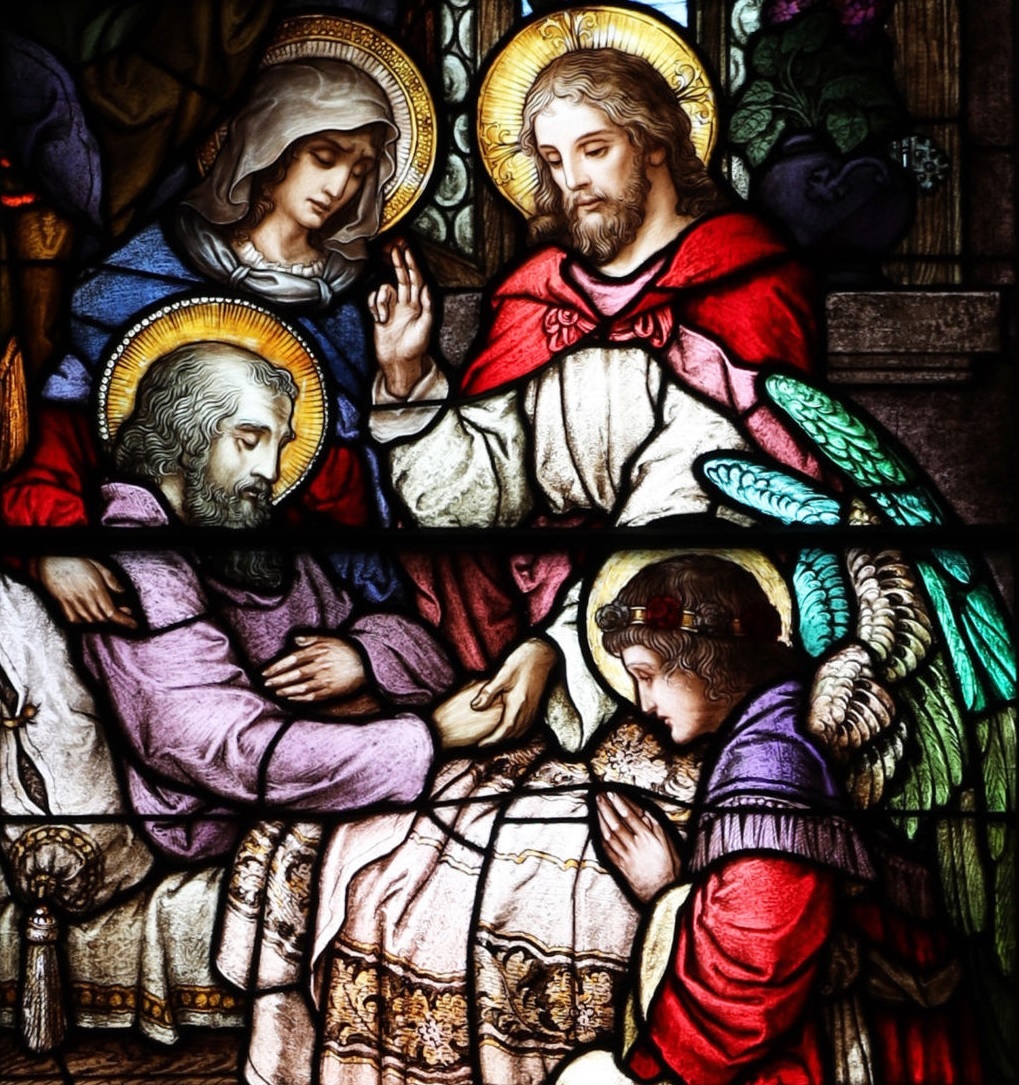
“Jesus, Mary, & Joseph, let me breathe forth my spirit into eternity with you.” As I prayed these words, a beloved resident of St. Agnes Home was taking her last breaths. She peacefully breathed her last surrounded by the prayers and love of her children and the sisters. This was the first time I had ever been present at a death, and it was at the death of a resident who is very close to my own heart. I can’t explain the joy and the trust which filled my heart, even in the midst of my tears. What a sacred moment! It was a moment in which I thought to myself, “This is what I want to do for the rest of my life. I want to love and pray souls into Eternity with You, Jesus.” To be present for the final moments of the life of this woman I love made concrete for me, in a new way, the faith I profess each time I say the creed. Indeed, I believe in the communion of saints, the forgiveness of sins, the resurrection of the body and Life everlasting! I believe in Jesus Christ, the only Son of the Father, who has come and is our Savior.
This was one of the most impactful moments of my time spent in the apostolate these last 6 months. I was asking Jesus for the grace to be present as someone took their final breath. I desired to be there, to pray with and for a soul, entrusting her to the Mercy of the Father. As I whispered to our dying resident, “Jesus, so so close, He is so close,” I felt the truth of that within myself. Yes, Jesus, You are so close. Our little and needy souls attract your mercy and draw You to us. What a mystery! The moment of this holy death brought me to the truth that is constant. Jesus is so close! And He is even attracted, drawn to my soul which needs Him so much. I experienced a deep longing for this resident to be folded up in the Arms of Jesus, held close to Him for all eternity. How striking to think that Jesus’ desire for us is infinitely greater than our own longings for Him! “Precious in the eyes of the Lord is the death of His faithful ones.”
In the midst of multiple recent deaths in our home and community, Jesus has drawn me into the reality that “He came that we may have Life, and have it abundantly.” A priest friend visiting our community spoke beautifully to our residents during a homily a few months ago, and it struck me deeply. He told them that their aches and pains of old age, their frustrations, even their forgetfulness is a new mode of discipleship. It is a new mode of following Him to the Cross and to the Resurrection. How beautiful! Though difficult to accept, it is precisely those things which seem to be obstacles that Jesus is using to make us into His closest disciples, to form us into Himself. He wants to bring His Life into every part of ours!
This is a very hopeful thought. It fills me with hope that in each phase of my life, from the most joyful to the most sorrowful, Jesus is offering me His Cross, His joys, His salvation. Right now, I am entering back into the “cloister” of my novitiate. I will spend the next 6 months in the silence of our convent, in solitude with our Lord in the Blessed Sacrament as sacristan. And as I reflect on our residents and the invitation of our Lord to them, I see that it is true for me too! He is offering me a “new mode of discipleship”, a way to follow Him more closely, Life in abundance. He always has more! It does not always look like what we would desire. It may mean aches and pains, forgetfulness, decreased mobility. It may mean times of loneliness, times of facing our own weaknesses, of tears. But this is the way of following Him to the Cross. And through the Cross to the Resurrection! Jesus has come to give us life and has given it in abundance.
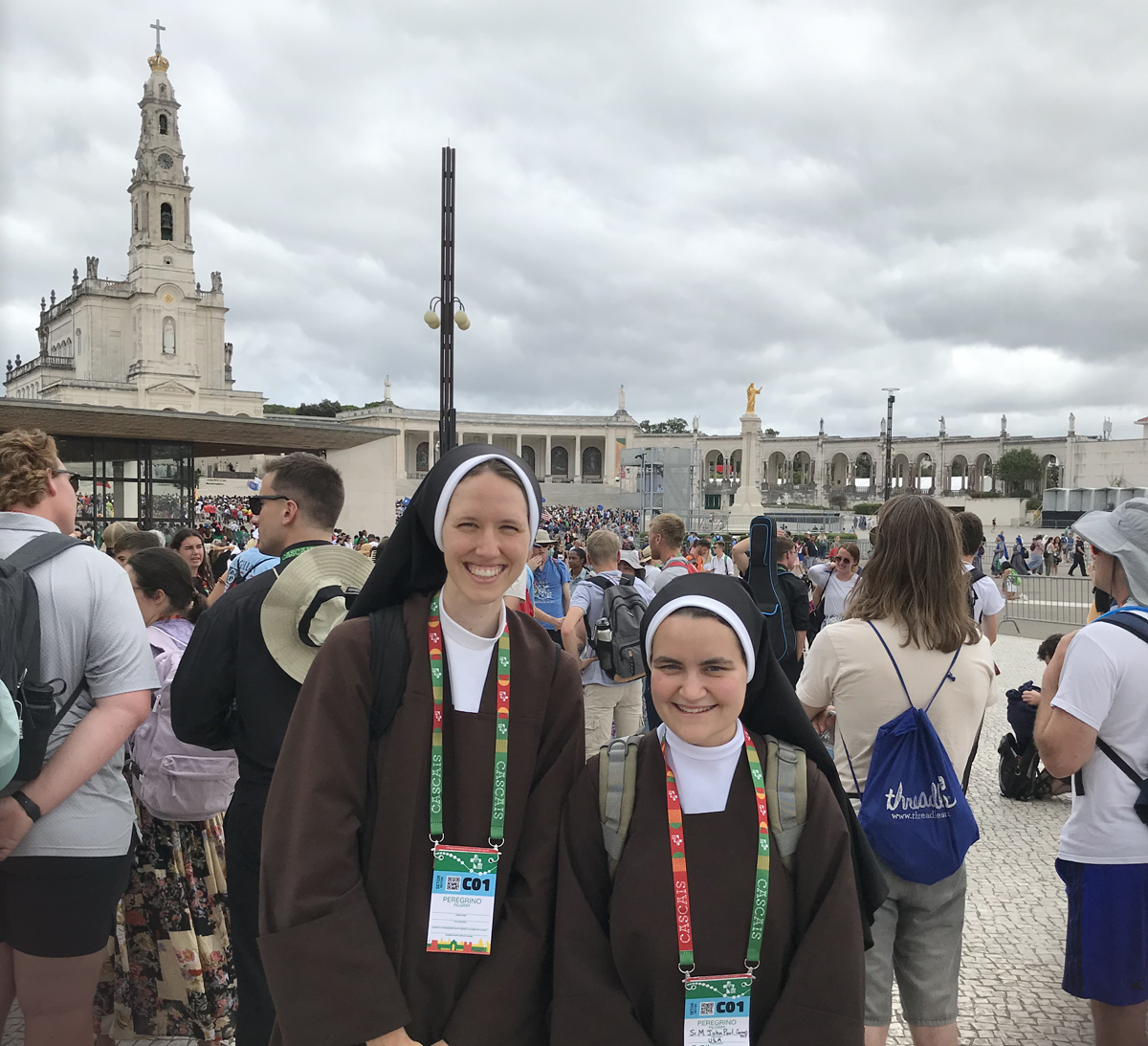
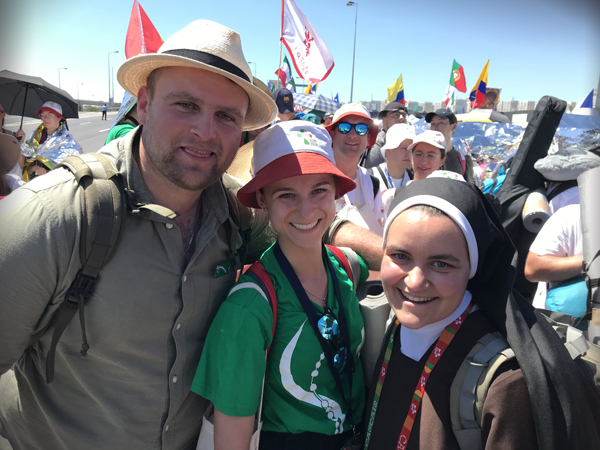
From July 30 to August 8, Sr. Maria Josefa and Sr. M. John Paul journeyed to Lisbon, Portugal for World Youth Day. The Archdiocese of St. Louis’ Young Adult Group invited us to journey with the young people. We numbered 107 pilgrims, including teenagers, young adults, married couples, a young woman preparing to become a consecrated virgin, about twenty seminarians, five priests, and the two of us Sisters. We flew into Madrid, Spain and boarded a bus to make the 9-hour drive to Lisbon. Providence would have it that we drove through Spain on the feast of St. Ignatius, and we also drove quite close to Avila! Once in Lisbon, we visited sights related to St. Anthony of Padua and made the memorable pilgrimage to Fatima to see the apparition sights of Our Lady. There were catechesis sessions each day for the young people which were divided into language groups. We went to some of these sessions and visited various sights open to the pilgrims. On Wednesday afternoon, both of us Sisters and some of the seminarians and priests attempted to participate in Vespers with the Pope, which was held for priests and religious. Although we were unable to be admitted, we were able to stand right behind the barrier as Pope Francis drove along the side of the road towards the monastery. He made eye contact with us, raised his eyebrows, and gave us a big smile. It was beautiful to encounter many Portuguese natives along the way who were visibly touched by our presence. One particular Portuguese young woman heard us singing and praying outside of our hotel one night. We invited her to join us in praise and worship. She not only joined us that night but also came back on two subsequent nights to pray with us and ask us questions about the faith. We learned that she was not baptized. She was visibly thirsting for Jesus, and she looked so peaceful and joyful as we spoke to her about the faith. While in Portugal, we felt St. Francis Xavier’s intercession in a special way. Portugal remembers the explorers who left from its shores to discover and evangelize new lands. St. Francis Xavier is one of thirty-three explorers featured on Lisbon’s Monument of Explorers. Not far from the Monument of Explorers was the Tower of Belem, which was built at the beginning of the sixteenth century. The Tower of Belem was the sight from which many explorers left and was the last sight of land. We thought about how this was probably the last sight St. Francis Xavier saw as he left Portugal for the Indies. We prayed that we may be filled with a zeal for souls, just as he was. We were blessed to participate in the welcoming ceremony for the Holy Father and the Vigil. It was estimated that there were 1.5-2 million people present for the Vigil and closing Mass! It was a great blessing to be present for such an event, and, even more, to learn what it means to be a pilgrim on this earth journeying to our heavenly home.
Below: Sr. M. John Paul struck up a conversation with a young couple in Lisbon who declared that they'd just gotten married...on July 2nd! "That was my wedding day, too!" was Sister's response for she professed her perpetual vows on the very same day. Wouldn't you know the couple just happened to be of all things - Polish! The nationality of Sister's most beloved patron, JPII.
By: Sr. M. Magdalene Therese
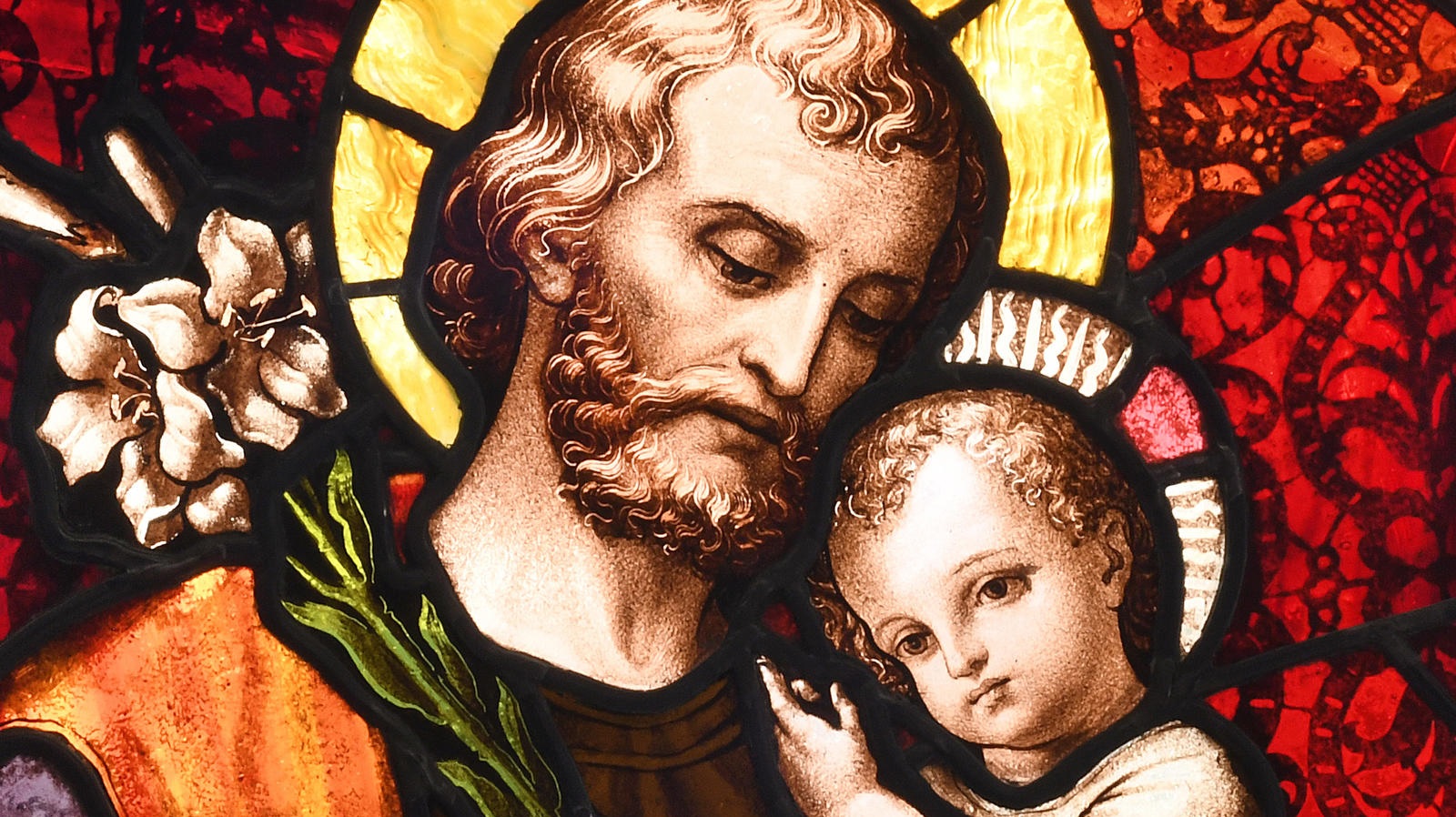
Our holy Mother Church has dedicated the entire month of March to St. Joseph. His merits are boundless and the unique litany in his honor elucidates his many admirable qualities and patronages. Not only is he Guardian of the Redeemer, he is the Protector of the Universal Church, and especially the Guardian of Virgins. He has a special place in the heart of every Carmelite dating back to Teresa of Jesus in the 16th century as she established her first reformed Carmelite Convent de San Jose in Avila, Spain—placing statues of St. Joseph at both entrances to watch over and protect her nuns.
Our own Mother Foundress, Blessed Maria Teresa of St. Joseph, was solidified in her love for this special fatherly patron when her own father (himself a Lutheran Superintendent) discovered her desire to convert to Catholicism, staunchly mocked her for praying to “such a ridiculous man”, and subsequently disowned her after she joined the Church. For Bl. Maria Teresa, St. Joseph’s heart was a place where her own heart could come to rest after being wounded and abandoned by her earthly father. Her devotion to him, and her desire for all of her daughters to be devoted to him as well, earned her a place in Fr. Donald Calloway’s book entitled Consecration to St. Joseph.
In the history of our community, countless stories of St. Joseph providing for our Carmel DCJ have been passed down from Sister to Sister. One of my favorites occurred early in our community’s beginning. A few Sisters were tasked with caring for and feeding a large orphanage of children who had no means of providing for themselves. The poor Sisters did the best they could to keep every child fed and healthy, but the store in the pantry had dwindled to just a few apples—hardly enough to feed the hungry faces that God had entrusted to their care. One sister, confident in St. Joseph’s unfailing love and his role as dutiful provider, had a child place the last apple into the hand of a statue of St. Joseph and both said a prayer begging his aid. The next morning a farmer arrived at the front door with a whole cart full of apples!
For me, coming from a family of divorced parents and being raised primarily by my mom, I had a much wounded heart with many places in need of a father’s love. It was shortly after I entered the convent that St. Joseph started making his presence known in my life. He just quietly kept showing up in the books I was reading, or catching my eye in a painting I had never noticed before, or appearing in the form of a statue in places I would visit. It took me a long time to allow him to break through my walls, at which point I subsequently started receiving his quiet, gentle, protective, fatherly love. Today, he has become one of my closest friends and I can see the healing that has started taking root in my heart and in my relationship with my own dad after letting St. Joseph into my life.
“Every moment of his life was consecrated to the service of our Lord: sleep, rest, work—everything was sacrificed uncomplainingly and unselfishly. Never would he say ‘Enough,’ for his generosity was as it were infinite. Devotedness is the measure of love and the sounding box of its strength. If we love someone more than ourselves, our devotedness is unbounded.” –Month of St. Joseph by St. Peter Julian Eymard
St. Joseph becomes a patron for us all as we daily beg his intersession for the strength to die to ourselves in our respective vocations. “Man finds himself in a true gift of himself” says Pope St. John Paul the Great, and St. Joseph is the epitome of how we are to lay down our lives in the service of Christ. May he enkindle in our hearts an ever burning love for the One whom he loved so well on Earth.
By: Postulant Erin
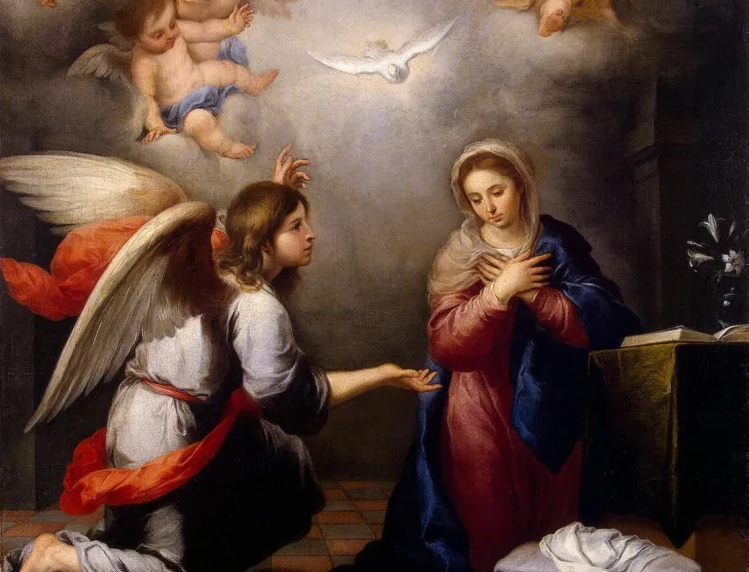
“Behold I am the handmaid of the Lord. Be it done unto me according to Thy Word.” This is Our Lady’s fiat - her total surrender to the Will of her Heavenly Father. These are the words I adopted as the desire to give my life to Christ deepened within my heart. I remember praying with the Annunciation during the summer after I finished high school and finding great excitement at the thought of echoing Mary’s fiat and bringing Christ into the world. It was so incredible a thought to me that I could do that too! I could give myself to the Father and bring Him to the world! I didn’t realize that this prayer could get any more profound than it felt to me at that time, but the Lord continued to expand my heart to receive more and more from this place in Scripture. The Annunciation has stuck with me, and new truths are brought up in my heart and mind every time I dive into it.
Sometimes, I go straight to the birth and childhood of Jesus when I think of Mary’s “yes”. I think of Christmas, of her bearing the Savior to the world, of her laying Him in a manger instead of holding Him in her arms, a sign of her total gift of Him to the world and to His mission. And because of the beauty found in the birth of Jesus, I tend to skip straight from the Annunciation to Christmas. But those words spoken by Mary to the Angel Gabriel marked the beginning of those precious 9 months where the Word of God was formed in her very self, and she waited for his birth. And this is exactly where she draws me in right now. Those words of surrender marked the beginning of Mary’s Advent. Just imagine it. Perhaps it is a rainy day and you are doing your chores or praying or preparing for a meal. An angel appears to you and asks of you a favor for God that will change not only your whole life, but the course of human history. And though you say yes in fear and trembling, you are also filled with great peace and awe in the magnificence of God. And then the angel departs. And you go outside. And even though the Spirit of the Most High has overshadowed you and Divine Life has taken His place in your very womb, nothing around you is any different. It is still raining. And the rain mingles with your tears of love as they stream down your face. All you can do is trust.
How beautiful to think of the tender moments throughout Mary’s pregnancy where she grew in love for her Baby, her God. I am sure that she saw the world through the eyes of the One being formed within her. Everything she did was oriented towards Him. Everything she did was preparing for the birth of this Baby King. She was filled with Divine Life as He formed eyes, ears, hands, heart. And He was formed of her very life! Her wonder in the created world must have been heightened as she pondered what it would be like for Jesus to experience everything for the first time. But she also had to embrace the silence of the season. She had to trust wholeheartedly that it was truly God made Man being formed within her without being able to see Him. She had to wait, to work, to live normal moments of everyday life as Divine Life formed within her silently and slowly.
This Advent is a beautiful opportunity to enter into Mary’s own Advent. We can be in the silence with her, trusting that Jesus is forming Himself in our hearts and in our whole beings as we await His coming. We can ask the Lord to fill us with Divine Life and let our Savior be formed within us- eyes, ears, hands, heart. He invites us to be patient, trusting His timing as He clothes our hearts with Himself. Oh, Jesus, fill our hearts with Your Divine Life! Give our hearts the grace to rest in the Advent, to find peace in the silence, and to trust in Your desire to be formed of our lives. Increase our excitement to see You when You come again and be formed in us that we might bear You to the world. Amen.
By: Sr. Mary Michael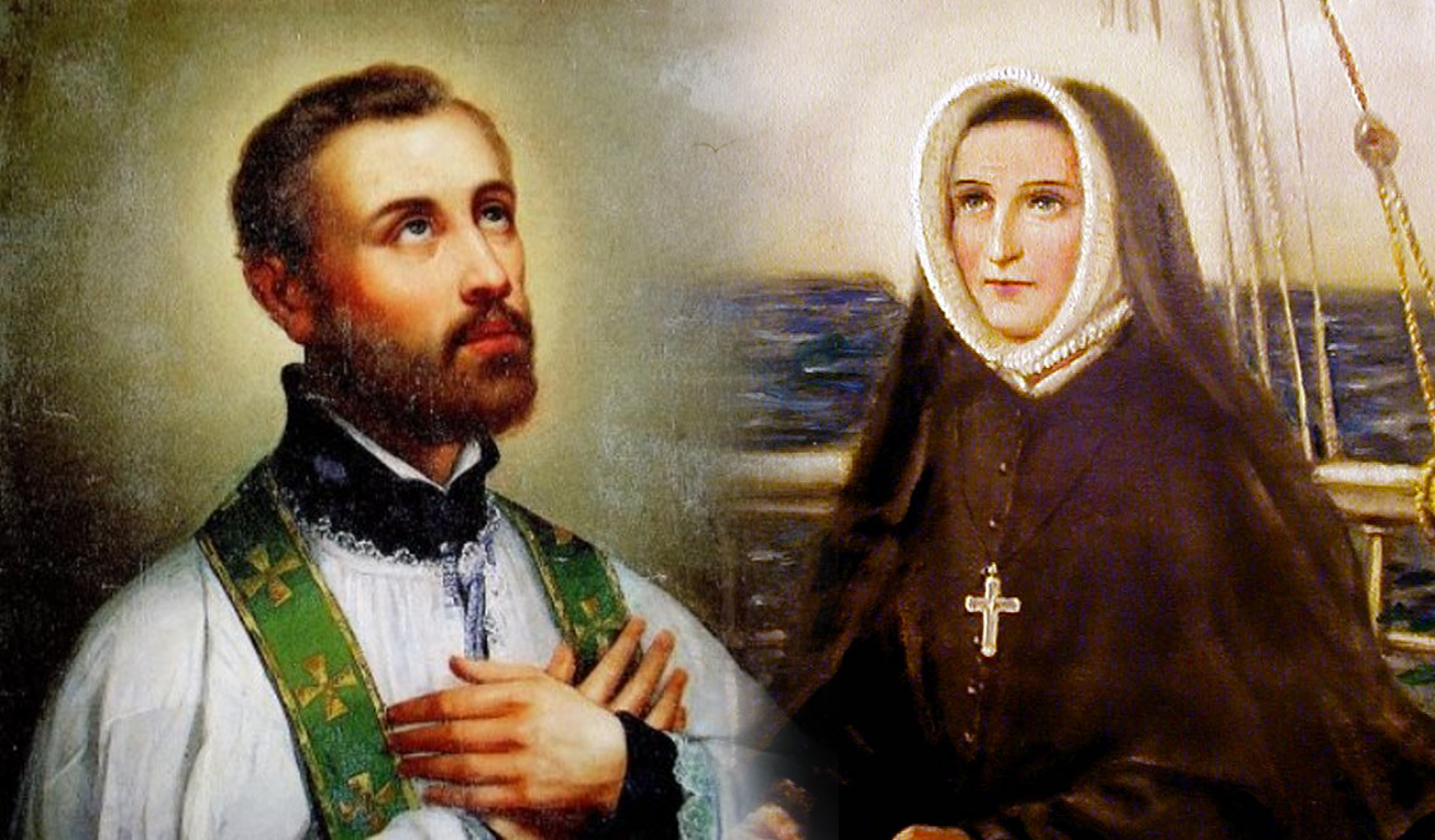
Francis Xavier and Rose Philippine Duchesne – what do a Spaniard from the time of St. Teresa of Avila (16th century) and a deeply pious young woman who survived the French Revolution have in common? More than one might think! Let me start off on a personal note—personal to us Carmelites of the Divine Heart of Jesus, that is. Our Foundress, Bl. Maria Teresa of St. Joseph, whom we affectionately call Dear Mother, was deeply moved by St. Francis Xavier, the missionary Saint! According to an unofficial source we recently consulted (just yesterday!), it happened that new information (which was actually old information, i.e. original manuscripts, documents, letters, etc.) about the Society of Jesus, including information about Francis Xavier, resurfaced and was translated into other languages around 1905, hitting Germany about 15 years after Dear Mother began our first home for orphan children in Berlin. She was profoundly inspired by him, so much so that he became one of the six patrons of our congregation – listed third only to Our Lady of Mt. Carmel and St. Joseph. Let me make this clear, this means he is ranked even above St. Teresa of Avila! That’s quite a feat…coming from a foundress who fell in love with St. Teresa of Avila, longed to be one of her daughters, and said, ‘It is to be Carmel and nothing else!’ Dear Mother gave Francis to us as our model and patron, especially regarding the apostolic dimension of our charism. Our directory quotes a letter of Dear Mother’s where she writes, “Please first of all, take up the Rule [of St. Albert] and seek to inspire the Sisters with it. As in my own case, we have to fall in love with St. Mother Teresa, with St. Francis Xavier and with the holy Rule. Then our love will grow strong and unconquerable; it will sanctify our souls and lead us to Heaven.” An additional fun fact for you—Francis Xavier became the patron of our province in 2018, bumping St. Agnes off the pedestal. However, it brings consolation to my heart that I’m sure they are both fine with this switch in heaven…and, don’t get us wrong, we still love St. Agnes!
Now, what does St. Rose Philippine Duchesne have to do with Carmel DCJ? Philippine has a fascinating history, if you ask me. She began religious in the Visitation order in 1788 at the age of about 19. After only 4 years, the tide of the French Revolution forced the community to disband. Imagine—only just beginning following the Lord in religious life and your whole world turning upside down or, should I say, inside out! Philippine, having found her home in the cloister (basically) was now thrown once again into the streets of France where she sought to find and serve Christ in the poor and suffering. After about 9 years of this, she and some companions tried to reestablish their Visitation convent, but to no avail. It was then that God led Philippine to Madeleine Sophie Barat and the newly founded Society of the Sacred Heart. Our Dear Mother had several encounters with the Sacré –Coeur Sisters and spoke very highly of them…
“I think I have never seen Sisters like these, never found such a religious spirit, in any country, in any convent, like these daughters of Madame Barat! It all has to do with humility and charity. These two virtues filled this little paradise with a wonderful perfume, and even more, this humility and charity radiated from each of the Sisters’ eyes. Wonderful. They led us through their entire convent, and I cannot say which of the Sisters I love the most, which I most revere: the choir or the lay Sisters. What a joy for all of Heaven, and happy Madame Barat, if she even had only one such perfect convent...I will always thank God for the grace of getting to know this religious community!”
Quite the 5 stars, right!? So, wouldn’t you imagine that when Dear Mother arrived in St. Charles (just outside of St. Louis) in 1920 and found a suitable property for a home for old folks, and discovered that a Sacré –Coeur convent and school were just three blocks down the road, she would have gone to become acquainted with the Sisters!? And wouldn’t you know that Philippine died in that very convent 68 years previous! We like to think it’s very possible that some of the children who would get in trouble just so they could sit by the aged Sr. Philippine’s side because they liked her so much were some of the very same old folks that our Sisters cared for at the end of their life! Crazy!...Or rather, beautiful!
Besides both having connections to our Carmel DCJ, both came from relatively well-to-do families, both were very human with deeply personal, holy, inspiring, and enduring friendships with the founders of their respective orders—St. Ignatius of Loyola and St. Madeleine Sophie Barat—who you can see also became Saints, both became missionary religious who longed to bring the gospel to new lands and pagan peoples (both actually did bring the gospel to Indians, i.e. Native Americans and to Indians in India)—Saints crazy on fire with a love for Christ that impelled them, that drove them to leave family, home, and country for the only One truly worthy of such such sacrifices. Finally, ironically one of my favorite aspects of their lives, they both died in what could have, and probably did to some degree, feel like failure. Francis Xavier was just 20 or so miles from the looming coast of China, the stronghold of the most influential Asian culture, where he longed to spread the gospel, but never made it. Philippine’s dream as a Sacré –Coeur Sister was to work amongst the Indians. She finally got the chance to do just that when she reached the tender age of 70-something, but due to declining health and an inability to learn the Potawatomi language in her old age, as much as she longed to be with the Indians and enculturate herself, she couldn’t hold out and was sent back to St. Charles after only one year with the Potawatomi tribe in Kansas. Sometimes it’s the ‘defeat’ of the Saints, their natural shortcomings or unfulfilled dreams that actually make them most relatable and, therefore, most inspiring.
Lord, make us Saints. It may not look the way we want it to look, we may not do the things we think we want to do, but when we do your will you promise us your grace and your love, your presence with us—let that be enough for us! Suscipe. Take, Lord, my heart and set it aflame.
St. Francis Xavier and St. Philippine Duchesne, pray for us!
Below: We toured Philippine’s shrine in St. Charles, MO, on her feastday, November 18th. Side note: If you’d like to learn more about Francis Xavier, this is a great documentary! –https://www.youtube.com/watch?v=GdvukHeFQfA
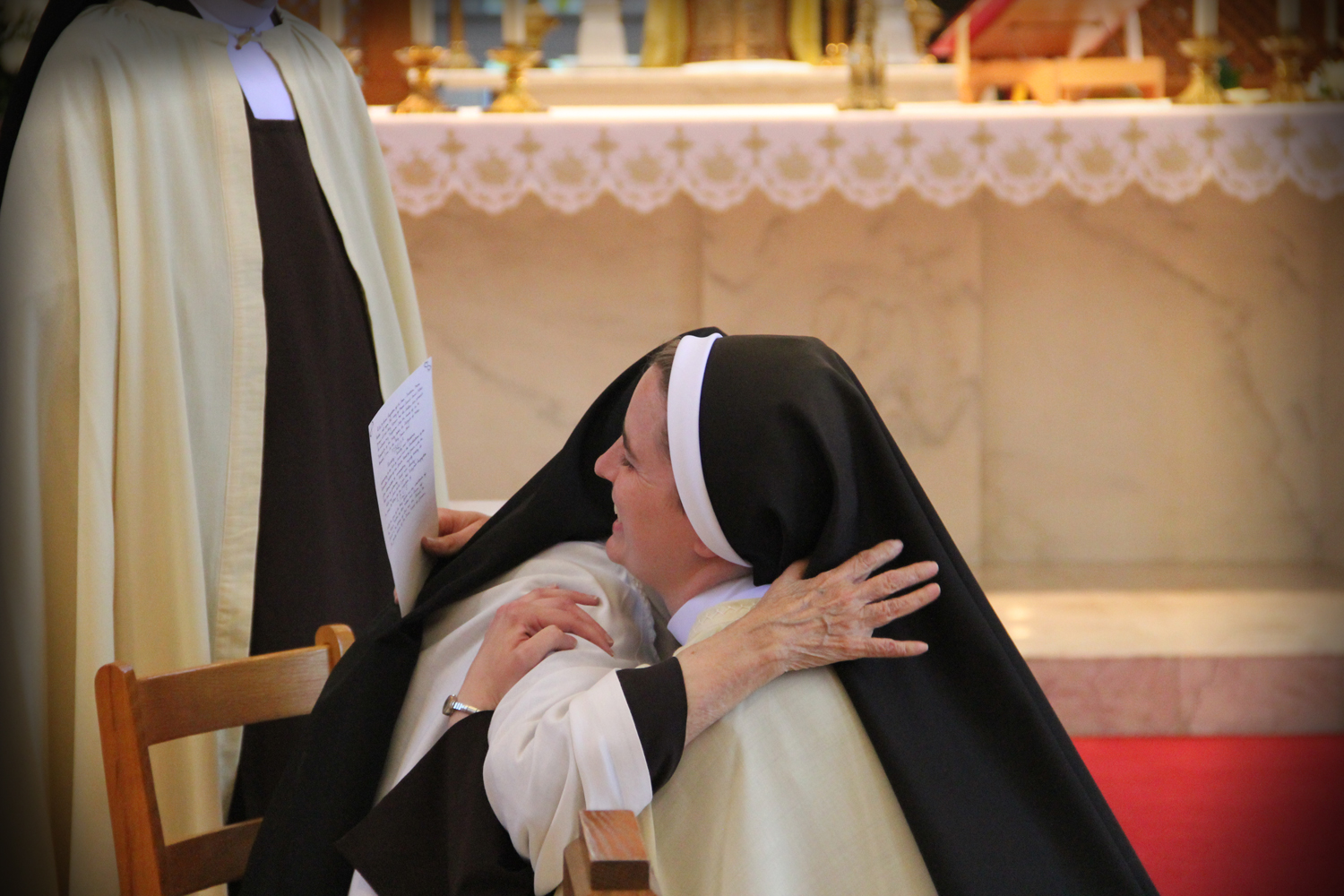
As I was preparing for Final Vows this year, I was asked by someone, “How can a young woman make vows “Forever?” I think I responded with something short and sweet, like “Grace!” I wish I had said, “God is Love. Love is eternal.”
Recently, the professed community was reading Man’s Search for Meaning during spiritual reading. In it, Dr. Viktor Frankl, a psychiatrist and expert in theoretical and clinical psychology who survived horrific experiences in various concentration camps during World War II, makes the argument that the key to human survival is the person’s conviction that his life has a purpose beyond himself. At one point, he recalls in stirring terms how the love of his wife literally saved his life one day:
And as we stumbled on for miles, slipping on icy spots, supporting each other time and again, dragging one another up and onward, nothing was said, but we both knew: each of us was thinking about his wife… A thought transfixed me: for the first time in my life I saw the truth as it is set into songs by so many poets, proclaimed as the final wisdom by so many thinkers. The truth – that love is the ultimate and the highest goal to which man can aspire. (p.37)
Frankl’s wife was not physically present. He did not know if she was still alive. But his love for her was the daily bread which reenergized his vigor for life. I appreciated this insight and recount of lived experience, because it heightened my awareness that love is binding and supersedes temporal and spatial structures; in other words, “Love is eternal.”
We all desire this eternal love. Through God’s grace, we are all capable of participating and sharing in this love, this binding and total exchange of selves. In his apostolic letter, Vita Consecrata, St. John Paul II highlights this mystery of eternal love as revealed in Religious Life when he proclaims:
This is the meaning of the call to the consecrated life: it is an initiative coming wholly from the Father (cf. Jn 15:16), who asks those whom he has chosen to respond with complete and exclusive devotion. The experience of this gracious love of God is so deep and so powerful that the person called senses the need to respond by unconditionally dedicating his or her life to God, consecrating to him all things present and future, and placing them in his hands. (17)
I recalled this excerpt frequently as I was preparing for Final Vows. The Religious Sister’s impetus for vowing her life to God must always be the reception of the deep, powerful and gracious love of God. As she receives this gift, her free response is to love as deeply, powerfully and graciously as a creature can: giving everything back to the One who gives everything. When Final Vows are understood as a young woman’s response to Eternal Love, the suggestion of a temporary commitment conditioned by temporal satisfaction is recognized as a skewed response. God’s being is love, and He is eternal. The question is whether our response to Love is grounded in love. If it is, the vows are eternal.
So, great question and please pray that my life becomes an adequate reply. After receiving the love of God, I hope my utterance of “Forever” is only natural - or, should I say, supernatural: “God is Love. Love is eternal.”
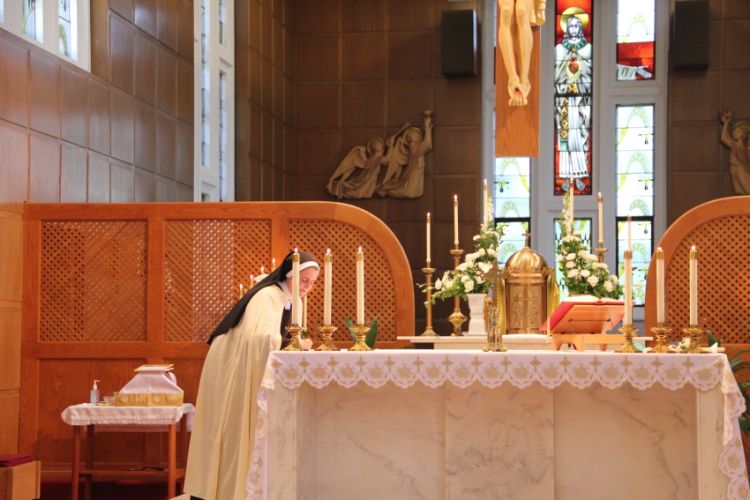
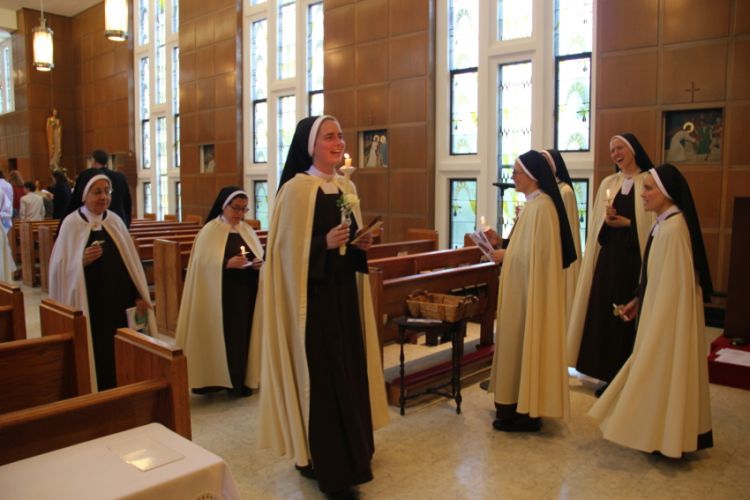
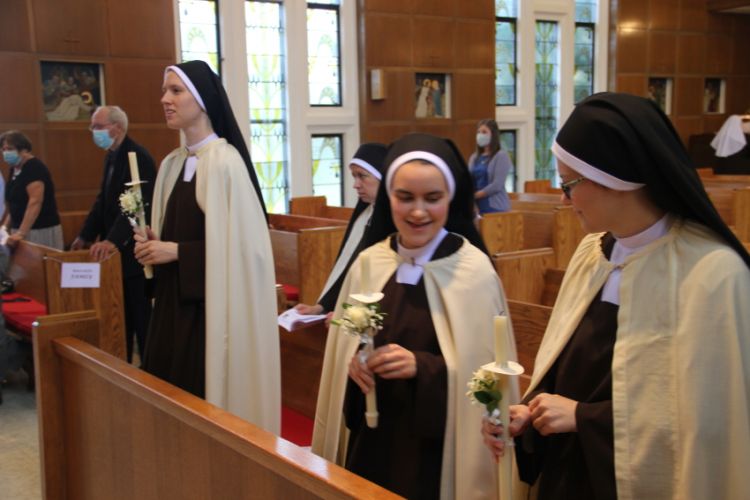
By: Postulant Emma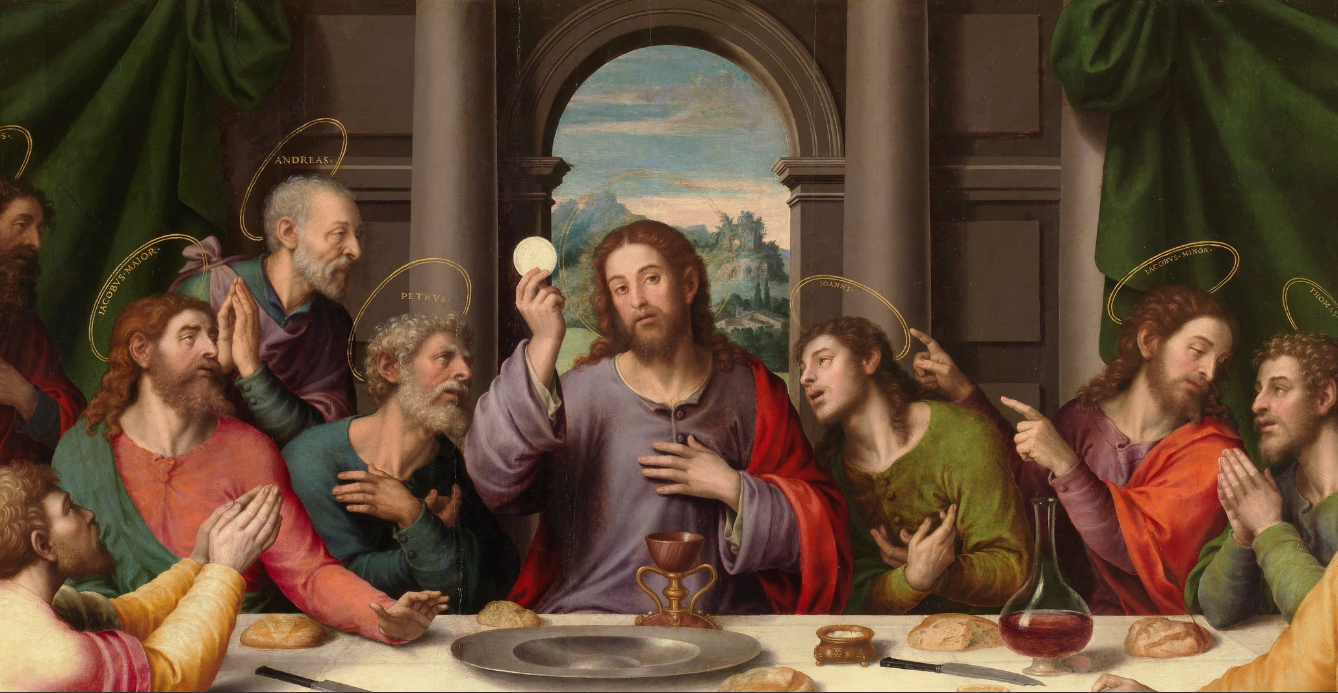
Our Lord left us with two of the greatest gifts imaginable on Holy Thursday, the Priesthood and the Eucharist. Food and drink to sustain us on our journey to heaven- to be so intimately joined with the heart of Christ every time we receive his most holy body and blood through the hands of his priests. At the Last Supper, Jesus calls his disciples to be priests after his own heart, and to be shepherds of the flock. John 17, which is known as the “high priestly prayer”, so beautifully reveals Jesus’ deep love and prayer for his priests. “I pray for them…I will no longer be in the world, but they are in the world, while I am coming to you. Holy Father, keep them in your name that you have given me, so that they may be one just as we are…I protected them and guarded them…I do not ask that you take them out of the world but that you keep them from the evil one…consecrate them in the truth…I pray not only for them, but also for those who will believe in me through their word…that the world may know that you loved them even as you loved me…Father, they are your gift to me.” It is so humbling that He leaves Himself in human hands, and in all the tabernacles of the world, even as we continually wound His heart…but He would rather dwell with us than leave fallen humanity without Himself. That is perfect love. The same love that is shared between the Father and the Son is manifested in this most precious gift. We are intimately known and loved through this sacrament. Jesus longs for us to have a participation in His joy and his love, as it is in heaven.
It was very striking to me this year my great thirst for Him on Good Friday when He was not present in our tabernacle…the same longing of the two disciples on the road to Emmaus. Their hearts were burning in His very presence, and my own heart echoed their cry of, “stay with us, Lord!” At the same time, it is again so humbling and profound to recognize that the deep thirst and desire we have for our Lord is ever greater in His own heart for us. He so longs to be with us always, even until the end of time. Jesus has truly left us with the ultimate gift, the gift of Himself. At every Holy Sacrifice of the Mass, we see a glimpse of heaven on earth. May we be truly grateful! Mary, Mother of the Eucharist and of Priests, pray for us!
By: Postulant Jordan
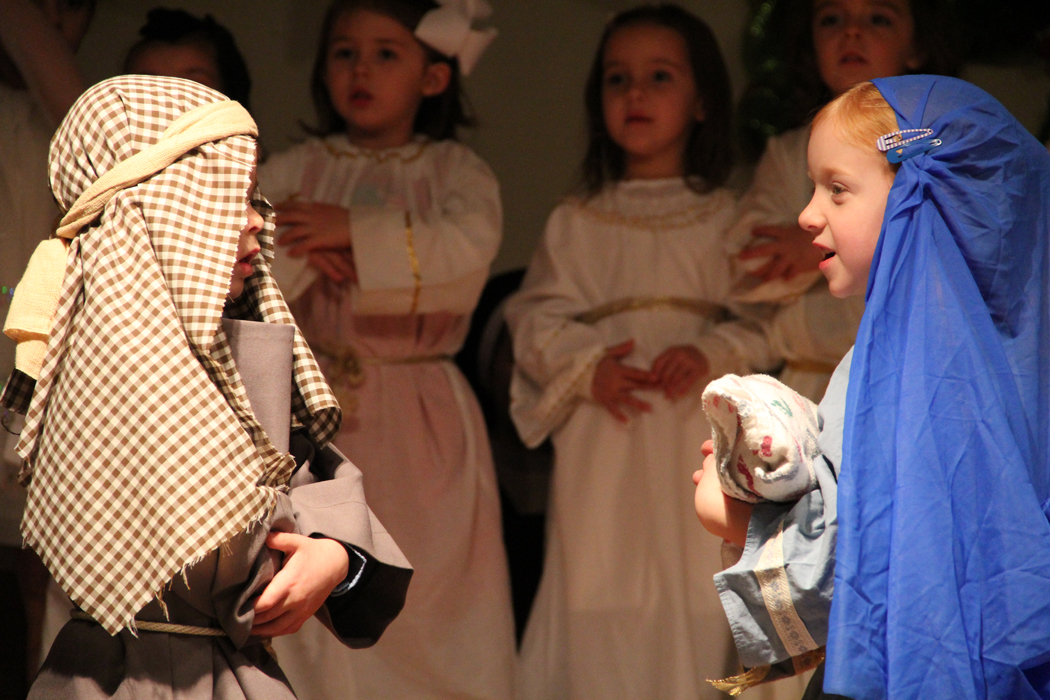
Since entering the convent in July, I have had the opportunity to assist in the 5 year old classroom of our Carmelite Child Development Center. One highlight from the past six months of working with these kids has been helping to prepare them for their annual Christmas pageant. The 5 year old Christmas pageant is not unlike many Christmas pageants going on at schools around the country: a narrator reads the story of Jesus’ birth, and children dressed as Mary, Joseph, Angels, and Magi parade around the stage as their parents eagerly try to snap a photo. However, I found that the weeks leading up to the pageant were even more rewarding than seeing the final production. In addition to teaching the children where to stand and how to sing verses of “Silent Night”, great care was taken to instill in the children the actual meaning of Christmas for us as Christians. One sweet girl in our class was assigned the role of “Star” in the Christmas pageant, meaning that she got to stand in a prominent place on stage above Mary, Joseph, and baby Jesus and the rest of the children on stage would point to her as they sang the lyrics “Star of wonder, star of night, star of royal beauty bright” during the song “We Three Kings”. Despite her normally very mature demeanor, during practice (as everyone pointed at her), she lapsed into a silly mood, pretending to examine her pockets or anything else despite holding her start proudly above her head. I took her aside at the first chance I had, hoping to boost her confidence and remind her that her role was important, so I asked her “Cecelia, what are you in the Christmas pageant?”
“The star,” she replied with a smile.
Instead of then telling her what I thought the importance of the star was, I simply asked her, “And what is the job of the star?”
“To lead people to Jesus,” she said, very matter-of-factly. I was blown away. After we mutually established that the star would proudly shine in the sky (or on stage) and not try to hide as people looked at it, I let her go, and I was left to reflect on our conversation. In none of the religion lessons or explanations given to the children did anyone ever say that the star leads people to Jesus, and yet, young Cecelia intuitively knew it. Upon further reflection, I realized that we are all called to live our lives boldly in a way that leads people to Jesus. Whether it is something as small as holding the door for someone and smiling, or having an intentional conversation with someone about your faith and calling them to deepen their own, we are all called to bring souls closer to Jesus through our own lives.
In the gospel reading for Epiphany Sunday, it says that after the magi journeyed and reached the place that the star had stopped where the child was, “they were overjoyed at seeing the star.” The light of the star that they had been following finally led them to the dwelling place of the Holy Family, but before they even entered the house to see the Christ Child, the star caused them to be overjoyed. As we wrap up this Christmas season and head into the year 2020 at full speed, may we all stop to consider how to let the light of Christ illumine our hearts even brighter so that we can be the star to all those we encounter.
In the words of Benedict XVI: Man's true constellations are those men who show him the new path of his heart and his vocation. Christ is the star that has risen for us. In faith, he himself kindles for us the light that makes other men stars who show the way to him...This makes Christmas a very practical matter. To look at the star means receiving light and giving light, radiating in the world around us the light that we have received, so that it can provide orientation to others, too. We have more than enough opportunities to do this, even outside Advent: once our heart has awakened, we see around us so many others who are waiting for a light. Let them not call out to us in vain. (Ratzinger, The Blessing of Christmas, 96)
